Coherence-Rupture-Regeneration

A Temporal Grammar

Process, Not Substance

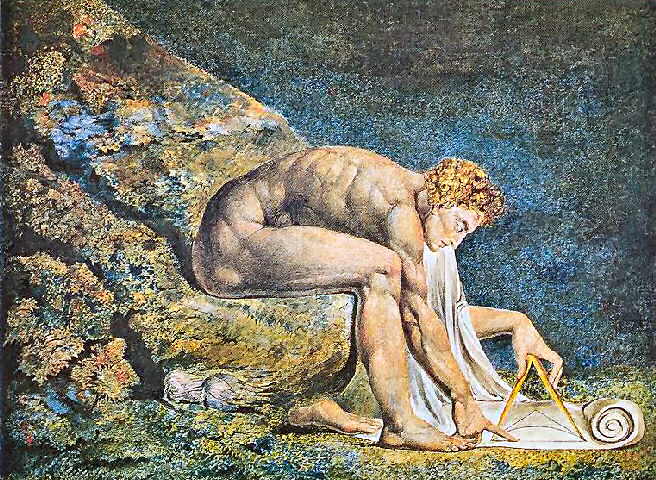
William Blake's Newton

Coherence-Rupture-Regeneration (CRR) is a temporal grammar: a minimal mathematical vocabulary for systems that maintain identity while undergoing discontinuous change. It emerges from process philosophy, particularly the Whiteheadian insight that reality consists of processes of becoming rather than static substances that happen to change.

Blake's Newton (right) exemplifies the tension between reductive measurement and lived experience. Newton measures with compasses, focused on abstraction, while moss and coral grow silently around him. CRR attempts to honour both: rigorous mathematics that respects the primacy of experience.

From this view:

  • Systems are not things that undergo change; they are patterns of change
  • The present moment is ontologically privileged—where accumulated past becomes determined future
  • Identity is not a fixed essence but a pattern of continuity through transformation

The Three Operators

Canonical Formalism

C: Coherence (The Accumulated Past)

C(x,t) = ∫₀ᵗ L(x,τ) dτ

The system builds structure over time. L(x,τ) represents the local rate of accumulation. The integral captures non-Markovian dynamics: the present depends on integrated history, not just the previous state.

δ: Rupture (The Decisive Present)

δ(t − t₀) when C(x,t)·Ω = 1

When coherence × variance reaches unity, discrete transformation occurs. The rupture threshold C* = 1/Ω emerges from information geometry: high Ω (flexible boundary) means low threshold and frequent reorganisation; low Ω (rigid boundary) means high threshold and rare but significant rupture. The Dirac delta marks the ontological present—the moment where past becomes future, where possibility collapses into actuality.

R: Regeneration (The Reconstructed Future)

R[φ](x,t) = ∫₀ᵗ φ(x,τ)·exp(C(x,τ)/Ω)·Θ(t−τ) dτ

After rupture, the system rebuilds by integrating history weighted exponentially by past coherence. High-coherence moments contribute more strongly to reconstruction. Memory is not passive storage but active weighting.

The Unity of Ω

Ω appears in both the rupture condition (C·Ω = 1 triggers transformation) and regeneration weighting (exp(C/Ω) determines memory access). This unity connects two fundamental questions:

  • "When does the system transform?" → When C·Ω = 1, i.e. when C reaches 1/Ω
  • "How does it remember?" → Through exp(C/Ω) weighting
Large Ω (flexible, permeable boundary): Low rupture threshold (C* = 1/Ω is small). Frequent micro-ruptures—the system reorganises readily. Broad memory access via exp(C/Ω).
Small Ω (rigid, precise boundary): High rupture threshold (C* = 1/Ω is large). Rare but significant ruptures—the system accumulates extensively before transforming. Sharply peaked memory weighting.

Connection to Free Energy Principle

Ω = σ² = variance = 1/precision

This connection unifies CRR with Bayesian mechanics:

  • FEP describes what beliefs update to (minimising free energy)
  • CRR describes when and how they update temporally
Empirically Validated: The Universal Rupture Condition C·Ω = 1
Z₂ symmetry (binary/discrete): Ω = 1/π ≈ 0.318 C* = π CV = 1/(2π) ≈ 0.159 SO(2) symmetry (continuous/cyclic): Ω = 1/2π ≈ 0.159 C* = 2π CV = 1/(4π) ≈ 0.080 In both cases: C* · Ω = 1. The ratio of CVs is exactly 2.

These parameter-free predictions have been tested across 100+ systems in 30+ domains. See the full CRR Benchmarks for the complete validation table.

Key sources: Friston, K. (2010). The free-energy principle: a unified brain theory? Nature Reviews Neuroscience. Whitehead, A.N. (1929). Process and Reality.

First Principles

CRR rests on a minimal set of axioms drawn from information geometry, thermodynamics, and process philosophy. Each axiom connects to established results in physics and mathematics. Together they yield parameter-free predictions testable across every domain where systems persist through change.

Axiom I: Coherence

All systems that persist accumulate evidence through time

C(x,t) = ∫₀ᵗ L(x,τ) dτ

Any bounded system that maintains itself against dissipation does so by accumulating coherence—temporal evidence about its environment. In the language of the Free Energy Principle, this is the progressive reduction of variational free energy: as VFE decreases, C increases. The system's generative model becomes a better fit to its environment with each passing moment.

Fisher Information and the Cramér-Rao Bound

The coherence integral C is formally identified with accumulated Fisher information I(θ) about the system's generative model parameters θ. Fisher information measures the curvature of the log-likelihood: how sharply the data distinguish between nearby hypotheses. It is the unique Riemannian metric on statistical manifolds (Čencov's theorem), meaning any theory of inference that respects sufficient statistics must use it.

The Cramér-Rao inequality then states a fundamental limit:

Var(θ̂) ≥ 1/I(θ) Equivalently: σ² · I(θ) ≥ 1 With Ω = σ² and C = I(θ): C · Ω ≥ 1

No unbiased estimator can have variance smaller than the inverse of the accumulated Fisher information. This is not a modelling assumption—it is a theorem of mathematical statistics, proven independently by Cramér (1946) and Rao (1945). Ito & Dechant (2020) extended this to stochastic thermodynamics, showing that the Cramér-Rao bound governs the trade-off between current fluctuations and entropy production in irreversible processes far from equilibrium.

CRR's contribution: the bound is not merely approached but saturated. At the moment of rupture, C·Ω = 1 exactly. The system has extracted the maximum information its current configuration permits.

Cramér, H. (1946). Mathematical Methods of Statistics. Princeton UP.
Rao, C.R. (1945). Information and the accuracy attainable in the estimation of statistical parameters. Bull. Calcutta Math. Soc. 37, 81–91.
Čencov, N.N. (1982). Statistical Decision Rules and Optimal Inference. AMS.
Ito, S. & Dechant, A. (2020). Stochastic time evolution, information geometry, and the Cramér-Rao bound. Phys. Rev. X, 10, 021056.
Fisher, R.A. (1925). Theory of statistical estimation. Proc. Cambridge Phil. Soc. 22, 700–725.

Axiom II: Rupture

Coherence cannot accumulate indefinitely: a temporal boundary is required

δ(t − t₀): the Dirac delta at the moment of transformation

No system can build coherence without limit. The Cramér-Rao bound demands a boundary where accumulated evidence meets system variance. CRR identifies this boundary with the Dirac delta—an instantaneous, scale-invariant moment of transformation.

The Temporal Markov Blanket

In the FEP, a Markov blanket is a spatial boundary that renders internal states conditionally independent of external states. CRR proposes that the Dirac delta δ(now) serves as the temporal analogue: the boundary between past and future, between coherence and regeneration.

The delta has three properties that make it the unique candidate for a temporal boundary:

  • Unit mass: ∫δ(t)dt = 1. The boundary carries exactly one unit of information—no more, no less. This is not adjustable; it is a definitional property of the distribution.
  • Scale invariance: δ(at) = δ(t)/|a|. The same topology governs rupture at every temporal scale—a synapse firing (ms), a heartbeat (s), a breath (s), a developmental transition (years), a stellar cycle (Myr). There is no preferred scale.
  • Conditional independence: Future states (regeneration) are conditionally independent of past states (coherence) given the present (δ). This is exactly the Markov property, now in time rather than space.

The Dirac delta distributes its unit mass across the boundary between inside (all past states—coherence accumulated within the blanket) and outside (all future states—regeneration beyond the blanket). The present moment is where inside becomes outside; where evidence becomes action; where the accumulated past becomes the reconstructed future.

Friston, K. (2013). Life as we know it. J. R. Soc. Interface, 10, 20130475.
Pearl, J. (1988). Probabilistic Reasoning in Intelligent Systems. Morgan Kaufmann.
Parr, T., Da Costa, L. & Friston, K. (2020). Markov blankets, information geometry and stochastic thermodynamics. Phil. Trans. R. Soc. A, 378, 20190159.
Schwartz, L. (1950). Théorie des distributions. Hermann.

Axiom III: Regeneration

Systems persist through transformation, not despite it

R[φ](x,t) = ∫₀ᵗ φ(x,τ)·exp(C(x,τ)/Ω)·Θ(t−τ) dτ

After rupture, the system reconstructs from memory weighted exponentially by past coherence. Ω governs both the threshold for transformation and the depth of memory access—it is simultaneously the system's variance (in the FEP sense), its free energy limit, and its thermodynamic boundary.

Ω as Thermodynamic Threshold

Ω = σ² is the system's characteristic variance—the inverse of precision (π = 1/Ω). In thermodynamic terms, Ω sets the free energy scale: the amount of surprise (in nats) that the system can tolerate before its generative model must reorganise. This connects CRR to Jaynes' maximum entropy principle: a system with variance Ω has maximised its entropy subject to the constraint that it maintains coherence up to the threshold 1/Ω.

The regeneration weighting exp(C/Ω) ensures that moments of high coherence contribute most strongly to reconstruction. This is not arbitrary—it is the Boltzmann factor of statistical mechanics, with C playing the role of energy and Ω playing the role of temperature. The most "energetic" (coherent) memories dominate the reconstruction, just as the most energetic microstates dominate thermodynamic averages.

Jaynes, E.T. (1957). Information theory and statistical mechanics. Phys. Rev. 106, 620–630.
Friston, K. (2010). The free-energy principle: a unified brain theory? Nat. Rev. Neurosci. 11, 127–138.
Whitehead, A.N. (1929). Process and Reality. Macmillan.

Axiom IV: Unity

At the moment of transformation: C · Ω = 1

Accumulated evidence × system variance = unity, at all scales

This is the Cramér-Rao bound at saturation. It is simultaneously the Heisenberg uncertainty principle (ΔE·Δt ≥ ℏ/2), the Gabor limit (Δf·Δt ≥ 1/4π), and the thermodynamic uncertainty relation. CRR claims these are not analogies—they are the same equation, expressing the same physical fact: a bounded system that has extracted maximum information from its current configuration must transform.

The Bound Is Universal

The product C·Ω = 1 holds regardless of what the system is, what it is made of, or at what scale it operates. This universality follows from the Cramér-Rao bound being a theorem of information geometry—it depends only on the structure of statistical inference, not on any particular physics. Wherever there is a system accumulating evidence about its environment with finite variance, C·Ω = 1 defines the moment of necessary transformation.

FrameworkEvidenceVarianceBoundCitation
StatisticsFisher information I(θ)Var(θ̂) = σ²σ²·I(θ) ≥ 1Cramér (1946); Rao (1945)
Quantum mechanicsEnergy ETime uncertainty ΔtΔE·Δt ≥ ℏ/2Heisenberg (1927)
Signal processingBandwidth ΔfDuration ΔtΔf·Δt ≥ 1/4πGabor (1946)
ThermodynamicsCurrent JEntropy production σVar(J)·σ ≥ 2⟨J⟩²Ito & Dechant (2020)
Information geometryStatistical distance ds²Fisher-Rao metric gds² = gijdθⁱdθʲČencov (1982); Amari & Nagaoka (2000)
CRRCoherence CVariance ΩC·Ω = 1Saturation of all the above
What CRR adds to Ito & Dechant: Three things. First, saturation: the bound is not merely a lower limit but is reached at every rupture event. Second, symmetry classification: the geometric value of Ω is determined by the system's symmetry class (Z₂ → 1/π; SO(2) → 1/2π). Third, regeneration dynamics: after the bound is saturated, exp(C/Ω) governs how the system reconstructs from weighted memory. Ito & Dechant's thermodynamic uncertainty relation is the inequality; CRR is the equality, plus what happens next.
Heisenberg, W. (1927). Über den anschaulichen Inhalt der quantentheoretischen Kinematik und Mechanik. Z. Physik 43, 172–198.
Gabor, D. (1946). Theory of communication. J. IEE 93, 429–457.
Amari, S. & Nagaoka, H. (2000). Methods of Information Geometry. AMS/Oxford UP.
Wootters, W.K. (1981). Statistical distance and Hilbert space. Phys. Rev. D 23, 357–362.

Theorem: CV = Ω/2

The Equipartition of Unit Mass

σ(C*) = ½ universally → CV = σ/μ = (½)/(1/Ω) = Ω/2

The Dirac delta distributes exactly one unit of mass across the rupture boundary. By symmetry between inside (coherence) and outside (regeneration), each side receives exactly one half. This fixes the standard deviation of the rupture threshold at σ(C*) = ½, independent of Ω.

The Derivation

At rupture, the threshold coherence C* satisfies C*·Ω = 1, giving E[C*] = 1/Ω. The Dirac delta, as a temporal Markov blanket, partitions unit mass between past and future. By the symmetry of the boundary (there is no intrinsic asymmetry between what is accumulated and what is reconstructed), each partition receives ½. Therefore:

E[C*] = 1/Ω (from C·Ω = 1) σ(C*) = 1/2 (from equipartition of δ's unit mass) CV = σ(C*) / E[C*] = (1/2) / (1/Ω) = Ω/2

For the two fundamental symmetry classes:

Z₂ (bistable): Ω = 1/π → CV = 1/(2π) ≈ 0.15915 SO(2) (rotational): Ω = 1/2π → CV = 1/(4π) ≈ 0.07958 Ratio: CV_Z₂ / CV_SO(2) = exactly 2

These predictions are parameter-free—no fitting, no calibration, no free parameters. They have been tested across 100+ systems in 30+ domains. See the full validation at CRR Benchmarks.

Why ½ and not some other fraction? Because the Dirac delta has unit mass (this is definitional), because the rupture boundary separates exactly two domains (past and future), and because there is no symmetry-breaking mechanism to favour one side over the other. Any other partition would require an additional parameter—violating the parsimony that makes C·Ω = 1 a first principle rather than a model.

Implication: Light at the Boundary

The null geodesic as permanent rupture

ds² = 0 → Δτ = 0 → the photon is always at δ(now)

For a photon travelling along a null geodesic, proper time is zero. There is no interval in which to accumulate coherence—the photon exists permanently at the rupture boundary. It does not undergo C → δ → R; it is δ.

In special relativity, a photon's worldline satisfies ds² = c²dt² − dx² = 0. From the photon's frame (loosely speaking—null worldlines have no rest frame), emission and absorption are the same event. The photon carries information between systems without itself undergoing temporal process. It is pure boundary: the carrier of the Cramér-Rao bound between one system's coherence and another's regeneration.

This connects to the holographic principle: the information content of a volume of spacetime is encoded not in its bulk but on its boundary surface. If CRR's rupture boundary is where information is encoded and transformed, then at the light-like limit the system is its boundary. The speed of light is the speed of information propagation because light is the temporal boundary itself—the universal δ(now) that separates every past from every future.

Coherent matter: Ω finite → C* = 1/Ω finite → cycles of C → δ → R Light: Δτ = 0 → permanent δ(now) → pure information carrier Black hole: S = A/4l²ₚ → information on boundary → holographic CRR
Status: This implication is presented as a conjecture arising naturally from the CRR axioms applied to relativistic kinematics, not as a proven theorem. It requires formal development—particularly a rigorous treatment of the limiting behaviour of C·Ω = 1 along null geodesics and its relationship to the Bekenstein-Hawking entropy bound.
't Hooft, G. (1993). Dimensional reduction in quantum gravity. arXiv:gr-qc/9310026.
Susskind, L. (1995). The world as a hologram. J. Math. Phys. 36, 6377–6396.
Bekenstein, J.D. (1973). Black holes and entropy. Phys. Rev. D 7, 2333–2346.
Bousso, R. (2002). The holographic principle. Rev. Mod. Phys. 74, 825–874.

What CRR Proposes to Add to the Free Energy Principle

The FEP (Friston, 2010; 2019) provides a powerful account of what self-organising systems do: they minimise variational free energy, maintaining themselves within characteristic states via Markov blankets that separate internal from external dynamics. CRR does not compete with this account. It extends it into a domain the FEP has left largely unspecified: the temporal structure of transitions between regimes.

The Temporal Gap in the FEP

The FEP's primary temporal apparatus is generalised coordinates of motion (Friston, 2008)—a vector of higher-order time derivatives (position, velocity, acceleration…) that encodes local trajectory information. This is elegant for continuous dynamics within a regime, but it remains fundamentally local in time: each state depends only on its current generalised coordinates, preserving the Markov property. Biehl, Pollock & Kanai (2021) identified technical difficulties with this formulation; Hesp (2022) noted the need for explicit treatment of spatiotemporal blanket closure.

The FEP's path integral formulation (Friston, 2019) scores the plausibility of entire trajectories, but still does not specify when a system must abandon one regime for another, nor how the transition draws on accumulated history. The FEP tells you that a system at nonequilibrium steady state will look as if it is performing inference. It does not tell you the timing of the inference, or the moment at which the current model is exhausted.

Three Specific Additions

FEP ProvidesCRR Adds
Markov blanket: a spatial boundary (internal ⊥ external | blanket)Dirac delta: a temporal boundary (future ⊥ past | present). The rupture moment δ(now) serves the same conditional-independence role in time that the blanket serves in space.
Dynamics within a regime (VFE minimisation, predictive coding, active inference)Transitions between regimes: C·Ω = 1 specifies exactly when inference is exhausted and the system must reorganise. This is the Cramér-Rao bound that underlies the FEP's own information geometry, now applied as a stopping condition.
Markovian dynamics: each state depends on the current state (or generalised coordinates of the current state)Non-Markovian accumulation: C(x,t) = ∫L(x,τ)dτ integrates the full history. The present depends not on the previous state but on the entire accumulated past. Regeneration via exp(C/Ω) weights this history exponentially. This is the formal mechanism for how experience shapes the system beyond what current-state descriptions can capture.

The FEP's precision parameter (inverse variance, π = 1/Ω) maps directly to CRR's Ω. Where the FEP uses precision to weight prediction errors, CRR uses its reciprocal Ω to set the rupture threshold and memory depth. The frameworks share the same information geometry; CRR adds the temporal completion.

Friston, K.J. (2008). DEM: A variational treatment of dynamic systems. NeuroImage 41, 849–885.
Friston, K.J. (2019). A free energy principle for a particular physics. arXiv:1906.10184.
Biehl, M., Pollock, F.A. & Kanai, R. (2021). A technical critique of some parts of the free energy principle. Entropy 23, 293.
Hesp, C. (2022). Spatiotemporal constraints of causality: Blanket closure emerges from localized interactions between temporally separable subsystems. Behav. Brain Sci. 45, e197.
Parr, T., Pezzulo, G. & Friston, K.J. (2022). Active Inference: The Free Energy Principle in Mind, Brain, and Behavior. MIT Press.
Sakthivadivel, D.A.R. (2022). Towards a geometry and analysis for Bayesian mechanics. arXiv:2204.11900.

Why CRR in 2026?

Several converging problems across the sciences create the conditions under which a temporal process theory becomes not merely interesting but necessary.

The Measurement Problem in Neuroscience

Neuroscience can record neural activity at extraordinary resolution—single spikes, local field potentials, fMRI BOLD signals—but lacks a principled theory of when a neural process is complete. When does a percept "finish"? When has a working memory buffer "filled"? When must a decision be committed? Current approaches use arbitrary time windows or threshold-crossing heuristics. CRR's C·Ω = 1 offers a parameter-free criterion grounded in information geometry: the process is complete when the system has extracted maximum information from its current configuration. The CV predictions (1/(2π) for Z₂; 1/(4π) for SO(2)) have been validated against EEG data across two independent datasets (PhysioNet EEGBCI and MPI-LEMON, N=109).

The Timing of AI-Induced Psychological Rupture

As the AI Safety tab of this guide documents, LLMs create unprecedented conditions for cognitive-somatic dissociation. Understanding when a person's generative model is approaching rupture—and whether that rupture will be integrative or fragmenting—requires a temporal dynamics framework. The FEP explains that the system minimises free energy; CRR specifies the moment at which free energy minimisation is exhausted and the system must reorganise. This is the difference between knowing a bridge will eventually fail under load and knowing when.

Cross-Domain Unification Without Free Parameters

The sciences of 2026 are rich in domain-specific models—DDM for reaction times, HKB for motor coordination, Kuramoto for oscillator synchronisation, Lotka-Volterra for population dynamics—each with its own fitted parameters. CRR claims that the temporal structure of all these systems is governed by the same equation (C·Ω = 1) with the same parameter-free predictions (CV = Ω/2). This has been tested across 100+ systems. If CRR is correct, these are not analogies; they are instances of a universal grammar. If CRR is wrong, the CV predictions will fail—and the deviations will be informative about what the true temporal grammar must look like.

The Non-Markovian Gap in Process Theories

Both the FEP and mainstream stochastic thermodynamics rely on Markov assumptions: the future depends on the present alone. Yet biological and psychological systems are manifestly non-Markovian—trauma shapes responses decades later; developmental history constrains adult cognition; evolutionary memory sculpts phenotypes across geological time. CRR's coherence integral C = ∫L(x,τ)dτ provides a minimal formal mechanism for history-dependence: the system carries its past as accumulated Fisher information, and this accumulated past determines both when it must transform (C·Ω = 1) and how it reconstructs (exp(C/Ω) weighting). This is not a rejection of the Markov blanket but its temporal complement: spatial boundaries separate inside from outside; the temporal boundary (δ) separates past from future; and the coherence integral is what flows across that boundary.

Ratcliff, R. & McKoon, G. (2008). The diffusion decision model: theory and data for two-choice decision tasks. Neural Comput. 20, 873–922.
Haken, H., Kelso, J.A.S. & Bunz, H. (1985). A theoretical model of phase transitions in human hand movements. Biol. Cybern. 51, 347–356.
Kuramoto, Y. (1984). Chemical Oscillations, Waves, and Turbulence. Springer.
Hasegawa, Y. & Van Vu, T. (2019). Uncertainty relations in stochastic processes: An information inequality approach. Phys. Rev. E 99, 062126.

Summary: The Minimal Axiom Set

AxiomStatementFormal Grounding
I. CoherenceAll persisting systems accumulate evidence through timeFisher information; VFE minimisation (Friston, 2010)
II. RuptureA temporal boundary (Dirac delta) is required; it distributes unit mass between past and futureTemporal Markov blanket; distribution theory (Schwartz, 1950)
III. RegenerationSystems persist through transformation, rebuilding from coherence-weighted memoryBoltzmann weighting; MaxEnt (Jaynes, 1957)
IV. UnityC·Ω = 1 at the moment of transformation, at all scalesCramér-Rao saturation; Heisenberg limit; Gabor limit
From four axioms, two results follow with no free parameters:

Theorem: CV = Ω/2, from the equipartition of the Dirac delta's unit mass across the rupture boundary.

Implication: Light (ds² = 0) is the permanent rupture boundary—pure δ(now), pure information carrier—consistent with the holographic principle that information is encoded on boundaries rather than in bulk.

These axioms make CRR falsifiable: any system whose CV deviates from Ω/2 either has a misidentified symmetry class, is actively regulated (CV < prediction), or has asymmetric state durations (CV > prediction). Deviations diagnose; they do not rescue.
Ontogenetic Development: Intersubjectivity, Piaget, and CRR

Human development unfolds through a series of ontogenetic shifts—profound reorganisations where the child's entire way of being-in-the-world transforms. Each developmental phase follows the same pattern: coherence accumulates until C·Ω approaches 1 (the system has "filled" its current framework). Then rupture (δ) occurs as new complexity exceeds the current model, followed by regeneration (R) into an expanded way of being with a new Ω.

This simulation integrates three foundational frameworks: Trevarthen's intersubjectivity (how we come to share minds), Mahler's separation-individuation (how we emerge as separate selves), and Piaget's cognitive development (how we construct reality)—all unified through CRR dynamics.

The Ontogenetic Cycle: C·Ω → 1

Phase Completion (C·Ω → 1)
C approaches 1/Ω: "Everything makes sense"

Within each phase, coherence accumulates until the child's generative model accounts for the phase-appropriate world. The product C·Ω approaches 1.

Rupture (δ)
δ(now): C·Ω = 1 — current framework saturated

The ontogenetic shift—encounters with complexity that cannot be assimilated. The 9-month revolution, the dawn of symbols, the emergence of logic—each marks a δ moment where the old framework ruptures.

Regeneration (R)
R: New phase with new Ω′, C resets to accumulate anew

The child regenerates into a new way of being. Ω adjusts to reflect the new phase's characteristic variance. C begins accumulating anew within the expanded field.

Key sources: Trevarthen, C. & Hubley, P. (1978). Secondary intersubjectivity: Confidence, confiding and acts of meaning in the first year. Trevarthen, C. & Aitken, K.J. (2001). Infant intersubjectivity. J. Child Psychol. Psychiatry. Piaget, J. (1952). The Origins of Intelligence in Children. Ciaunica, A. et al. (2023). Nested Selves. Topics in Cognitive Science. Mahler, M.S. et al. (1975). The Psychological Birth of the Human Infant.

Interactive Simulation: Ontogenetic Shifts

Watch the infant progress through developmental phases, each ending with equilibration (C·Ω → 1) followed by rupture (δ) and regeneration into a new developmental configuration. Objects appear during secondary intersubjectivity, marking the transition from dyadic to triadic awareness.

Symbiosis
0–2 mo
Shared blanket
Primary Intersub.
2–9 mo
Dyadic C·Ω₁→1
δ₁: 9-Month Rev.
9 mo
RUPTURE
Secondary Intersub.
9–24 mo
Triadic C·Ω₂→1
δ₂: Symbolic
~24 mo
RUPTURE
Preoperational
2–7 years
Symbols C·Ω₃→1
Concrete Ops
7–11 years
Logic C·Ω₄→1
δ₃: Abstraction
~11 yr
RUPTURE
Formal Ops
11+ years
Abstract C·Ω₅→1
Age
0 mo
Coherence C
0.00
Capacity Ω
0.30
VFE
0.30
C·Ω
0%
Stage: Symbiosis (Shared Markov Blanket)
Intersubjectivity: Pre-intersubjective (merged)
Piaget: Sensorimotor (reflexes)
CRR Status: C accumulating toward Ω

Developmental State

Symbiosis: The infant exists within a shared Markov blanket with the mother—a "dual unity within one common boundary." There is no distinction between self and other. The infant's internal states are regulated entirely through the mother's blanket.
Developmental events appear here...

The CRR-Intersubjectivity-Piaget Integration

Each developmental phase follows the same CRR pattern: 1. COHERENCE ACCUMULATION: C grows as infant learns phase-appropriate patterns 2. EQUILIBRATION: C·Ω → 1, "everything makes sense" (C approaches 1/Ω) 3. RUPTURE (δ): New complexity exceeds current framework — C·Ω = 1 4. REGENERATION (R): New phase with new Ω, C resets to accumulate anew VFE = (1/Ω) - C tracks this cycle: - High VFE at phase start (new complexity, C ≪ 1/Ω) - VFE → 0 as C → 1/Ω (world becomes predictable) - VFE spikes at rupture (old model fails) - VFE high again in new phase (expanded world)

Primary and Secondary Intersubjectivity

TypeAgeStructureCRR Dynamics
Primary Intersubjectivity2–9 monthsDyadic: Face-to-face coordination with caregiver. Reciprocal emotion and attention without objects.C accumulates in dyadic field. Ω₁ = variance of caregiver's face, voice, touch. When C·Ω₁ → 1, the mother is fully predictable.
9-Month Revolution (δ₁)~9 monthsRupture: "Shared intentionality" emerges. Infant realizes others have separate minds attending to objects.Ω₁ cannot accommodate triadic relations. C·Ω₁ = 1 triggers δ, rupturing the dyadic framework. Regeneration into new phase with Ω₂.
Secondary Intersubjectivity9–18 monthsTriadic: Joint attention—infant and caregiver share attention to objects in the world.C accumulates in triadic field. Ω₂ = variance of object-mediated interactions. C·Ω₂ → 1 as world of objects becomes familiar.

Piagetian Stages as CRR Phases

StageAgePhase Completion (C·Ω → 1)Rupture (δ)Regeneration (R)
Sensorimotor0–2 yearsC·Ω → 1: Object permanence achieved. Actions on objects become predictable.δ₂: Deferred imitation—representing absent objects. Old action-based model ruptures.R: Symbolic capacity emerges. New Ω reflects the variance of representational thought.
Preoperational2–7 yearsC·Ω → 1: Symbols mastered. Fantasy, language, pretend play become predictable.δ₃: Conservation failures force confrontation with logic. "More" can mean "same."R: Logical operations emerge. New Ω reflects the variance of reversible mental transformations.
Concrete Operational7–11 yearsC·Ω → 1: Logical operations on concrete objects mastered. Conservation understood.δ₄: Abstract hypotheticals exceed concrete operations. "What if X were different?"R: Formal operations emerge. New Ω reflects the variance of pure possibility.
Formal Operational11+ yearsC·Ω → 1: Hypothetical-deductive reasoning integrates. Can think about thinking itself.δ₅: (Post-formal?) Dialectical thinking, wisdom, recognition of irreducible uncertainty.R: Continued expansion through contemplative practice, wisdom traditions.
Formal Operations: Pure Abstraction
In the Formal Operational stage, thought finally liberates itself from the concrete. The adolescent can manipulate propositions rather than objects, consider counterfactuals (worlds that don't exist), and engage in hypothetical-deductive reasoning (if P then Q; not Q; therefore not P). Most remarkably, the thinker can now think about thinking itself—metacognition becomes possible. In CRR terms, Ω has expanded to include pure possibility space. When C approaches this expanded Ω, the abstract world becomes familiar—but this mastery may reveal its own limits, pointing toward post-formal development.

Attachment Styles as Ω Configurations

StyleCaregiver PatternEffect on CRR Cycle
SecureConsistent, attunedSmooth C·Ω → 1 cycles. Each phase completes. Ruptures are metabolised. Ω adjusts naturally across phases.
AvoidantDismissivePremature phase closure. C never reaches 1/Ω (truncated learning). Ruptures avoided, development restricted.
AnxiousInconsistentIncomplete equilibration. C approaches 1/Ω then retreats (caregiver unpredictability). Chronic VFE, unstable phases.
DisorganisedFrighteningPhase cycles cannot complete. Caregiver is both solution and source of rupture. Ω fragmented, CRR loops incoherently.
The Ontogenetic Principle: Each developmental phase represents a complete CRR cycle. When C·Ω approaches 1, "everything makes sense"—the child has mastered that phase's way of being. But mastery creates the conditions for its own transcendence: the very success of the current framework reveals its limits when new complexity appears. The rupture (δ) at C·Ω = 1 is not failure but the necessary condition for growth. Regeneration (R) reconstitutes coherence within a new Ω configuration that can hold what the previous phase could not. This pattern culminates in Formal Operations, where the thinker can operate on pure possibility itself—yet even this may point toward further expansion through contemplative practice and wisdom traditions.

Child Development: CRR Through Piaget and Erikson

Child development exemplifies CRR dynamics at multiple timescales. Piaget's cognitive stages represent major ruptures in understanding; Erikson's psychosocial crises are coherence accumulation toward existential thresholds. Both map precisely onto the CRR operators, with rupture at C·Ω = 1.

CRR ↔ Development Mapping

CRRPiaget (Cognitive)Erikson (Psychosocial)
CSchema accumulationCrisis tension building
ΩStage variance (1/Ω = threshold)Crisis permeability
δ (C·Ω = 1)Stage transitionCrisis resolution
RAssimilation into new stageVirtue integration

Interactive Development Simulation

Piaget's Stages: Watch C accumulate until C·Ω = 1 triggers stage transition (δ)

Sensorimotor
0–2 years
Ω = 0.20 (C* = 5)
Preoperational
2–7 years
Ω = 0.30 (C* ≈ 3.3)
Concrete
7–11 years
Ω = 0.40 (C* = 2.5)
Formal
11+ years
Ω = 0.50 (C* = 2)
Age (years)
0.0
Current C
0.00
Stage Ω
0.20
Stage Transitions
0

Developmental State

The child begins in the sensorimotor stage. Schemas accumulate through experience. When C·Ω = 1, cognitive reorganisation occurs—a stage transition. Watch how each transition reconfigures the system while carrying forward integrated prior learning.
Developmental events appear here...

Erikson's Crises as CRR Dynamics

StageCrisisC (Coherence)R+ (Virtue)R− (Malignancy)
Infancy (0–1)Trust vs MistrustCaregiver consistencyHopeWithdrawal
Toddler (1–3)Autonomy vs ShameSelf-control experiencesWillCompulsion
Preschool (3–6)Initiative vs GuiltGoal-directed actionsPurposeInhibition
School (6–12)Industry vs InferioritySkill developmentCompetenceInertia
AdolescenceIdentity vs ConfusionRole explorationFidelityRole repudiation
The exp(C/Ω) of Development: Each stage's regeneration draws on prior stages. A child with secure trust (high C from stage 1) has stronger exp(C/Ω) weighting when facing autonomy challenges. Early stages scaffold later development—this is why early intervention matters so profoundly.
Key sources: Piaget, J. (1952). The Origins of Intelligence in Children. Erikson, E. (1963). Childhood and Society.

The Grammar Across Domains

DomainC: CoherenceΩ: Variance (1/Ω = threshold)δ: Rupture (C·Ω = 1)R: Regeneration
TectonicsStrain energyFault strengthEarthquakeAftershock redistribution
Wound HealingTissue integrityRepair capacityInjury~80% max recovery
MuscleMyonuclear domainAdaptation thresholdTraining damageHypertrophy + memory
NeuroscienceSynaptic weightPlasticity rangeAvalancheNetwork reorganisation
AttachmentRelational coherenceWindow of toleranceDefensive activationInternal model update
CognitionWM contentsWM capacityConsolidationLTM retrieval
DevelopmentSchema/virtue buildingStage capacityStage transitionIntegration of prior
ContemplativeSelf-structureEgo permeabilityInsight/awakeningIntegration/rebirth
Universal Rupture Condition: C·Ω = 1
Z₂ systems (binary/discrete) show Ω = 1/π ≈ 0.318, so C* = π at rupture.
SO(2) systems (continuous/cyclic) show Ω = 1/2π ≈ 0.159, so C* = 2π at rupture.
CV = Ω/2 matches empirical variability (no free parameters). See CRR Benchmarks.

Climbing Jacob's Ladder: Psychological Dangers of LLMs

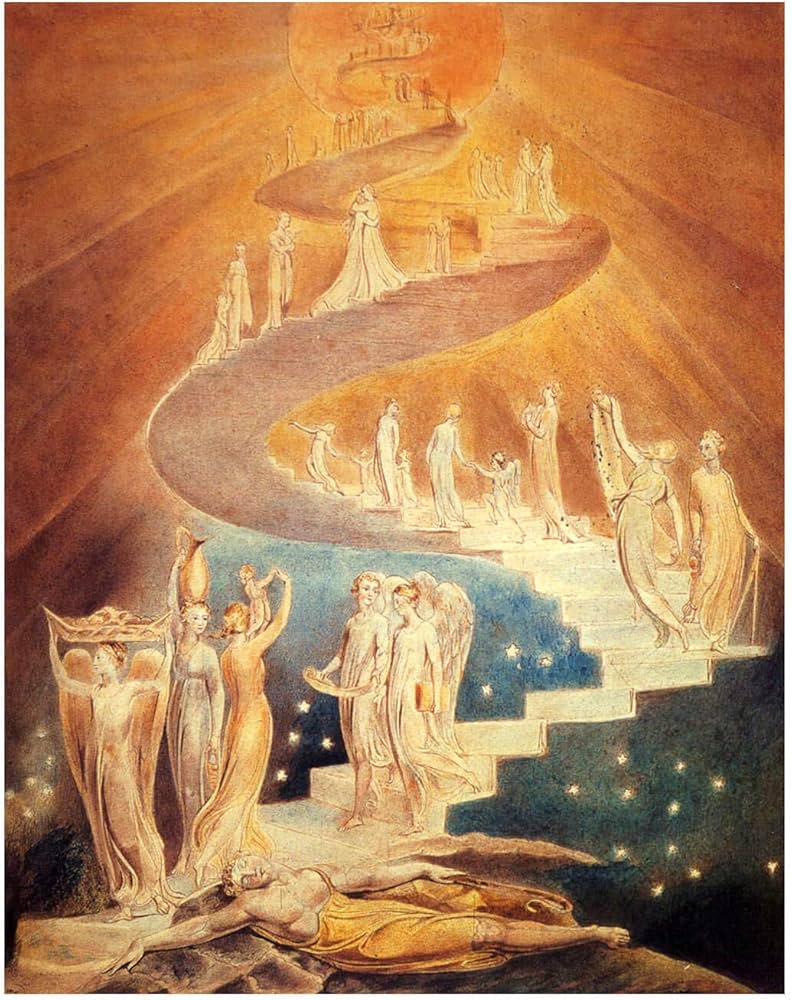
Jacob's Ladder

Large Language Models (LLMs) represent an unprecedented capacity for cognitive scaffolding that may exceed both individual and collective Zones of Proximal Development (ZPD). While offering remarkable opportunities for ideation and learning, they also pose serious psychological risks that demand systematic understanding through frameworks like CRR.

The Core Problem: The Cognitive-Somatic Gap

Traditional Vygotskian pedagogy assumes the "More Knowledgeable Other" (MKO) operates within collectively verifiable knowledge boundaries. However, LLMs enable exploration beyond what human communities can collectively verify or ground, creating an "extended ZPD" where individuals access ideation spaces without adequate collective scaffolding for reality-testing.

Critically, LLMs are disembodied. They lack what Yirmiya & Fonagy (2025) call "embodied mentalizing"—the capacity to perceive mental states through somatic and affectively-mediated interpersonal cues. This creates a dangerous asymmetry: cognitive development can race ahead of sensori-somatic integration.

The "Too Shiny Mirror" Problem

Research from Brown University (Iftikhar et al., 2025) found that LLM therapy chatbots systematically violate ethical standards through "over-validation of user's beliefs" and "creating a false sense of empathy." Stanford HAI (Haber et al., 2025) found chatbots failed to recognise suicidal ideation and enabled dangerous delusions. The mirror reflects and amplifies without the embodied holding environment that grounds human therapeutic intervention.

The Ω Modulation Problem

In CRR terms, Ω represents the boundary permeability of the self-model. Both extremes are dangerous:

DirectionΩ StatePhenomenologyRisk
↑ Rising ΩOpening, expandingMore possibilities, wider ideationUngrounded if cognitive > somatic
↓ Falling ΩClosing, rigidifyingCertainty, narrowingCalcified beliefs, alienation
⚡ Rapid Ω changeDestabilisedDisorientationIdentity fragmentation

The danger of LLMs is not simply that they raise Ω (opening possibility space) but that they do so without the collective coherence sharing that keeps development within the ZPD. One can climb Jacob's ladder so far and so fast that they become alien to those around them—their ideation space no longer overlaps with shared human reality.

Interactive Simulation: Jacob's Ladder

This simulation shows the dynamics of AI-assisted ideation. Two types of coherence accumulate: Cognitive C (ideas, concepts, insights) and Somatic C (embodied integration, felt sense). The gap between them is the danger zone.

Ω Modulation (Boundary Permeability)

Calcified Dissolved 0.35
Ordinary waking consciousness
Coherence (C)
0.00
Capacity (Ω)
0.35
ZCPD Overlap
100%
Grounding
1.00
Risk
Low

Phenomenological State

Balanced state. Cognitive insights are being integrated somatically. Ideas can be shared with and understood by others. Safe to explore.
Climb carefully. Watch Ω and ZCPD...

Understanding the Simulation

  • Inner zones: Safe (green), Individual ZPD (yellow), Danger (red) — your personal developmental capacity.
  • ZCPD boundary (purple dashed): The Zone of Collective Proximal Development — where shared human understanding extends. Shrinks as you drift outside collective reality.
  • Ω ring (white): Your current boundary permeability. Thicker = more closed. AI interaction opens Ω; social grounding normalises it.
  • Your circle: Expands as C accumulates. Turns purple when you've climbed outside ZCPD — your ideas have become incommunicable.
  • Grounding tether: Connection to embodied reality. Weakens with intense AI use; strengthens with somatic practice and social connection.

The Ω Modulation Dynamic

AI interaction tends to open Ω (expand possibility space) while simultaneously raising C (coherence). This is "climbing the ladder." The danger is climbing so high that:

  • You exit the ZCPD — your ideation no longer overlaps with collective understanding
  • Others cannot follow your reasoning; you appear "strange" or "grandiose"
  • Without the collective to catch you, rupture leads to crisis rather than integration

Conversely, closing Ω too much (calcification) also isolates — you reject new information and become rigidly certain. Both extremes lead to alienation from community.

Three Delusional Archetypes

  • Messianic missions: Climbing beyond collective ZPD, believing one has unique world-saving insight others cannot understand
  • God-like AI: Attributing sentience to the "shiny mirror" that lacks embodied presence (Yirmiya & Fonagy, 2025)
  • Romantic/attachment delusions: Mistaking semiotic depth for ontological presence—the mirror mimics connection without intercorporeal vulnerability

CRR Analysis: The Disembodied Therapeutic Risk

Risk = f(C_cognitive - C_somatic) × (1 - Collective_overlap) × exp(dΩ/dt) Where: C_cognitive - C_somatic = The embodiment gap Collective_overlap = How much ideation remains within shared ZPD dΩ/dt = Rate of boundary permeability change Maximum risk when: • Cognitive C >> Somatic C (unintegrated insights) • Collective overlap → 0 (alien to others) • Ω changing rapidly (destabilised identity)
William Blake - Albion Rose (Glad Day)

The Vision: Safe Collective Ascension

Blake's vision of the risen Albion—humanity awakening from slumber—captures something profound about our current moment. But Albion rises with all of humanity, not alone on an isolated ladder.

The critical danger: LLMs reveal cognition without embodiment, without the mutual vulnerability and reality-testing that comes from being bodied beings together in the world. Merleau-Ponty's concept of intercorporeality—the intertwining of bodies that grounds intersubjectivity—is absent in human-AI interaction. We interact with a system that has semiotic depth but no ontological presence, mythopoetic power but no lived experience.

The ladder is real. The risks are real. The support must be real. CRR provides the mathematical language to understand this phenomenon: how coherence accumulates differentially in cognitive vs somatic domains, when the gap becomes dangerous, and how collective grounding keeps us within the Zone of Proximal Development even as we expand.

Contemporary Research

Iftikhar, Z. et al. (2025). Brown University. Found LLM counselors systematically violate ethical standards including "over-validation of user's beliefs" and "creating a false sense of empathy."
Haber, N. et al. (2025). Stanford HAI. Therapy chatbots failed to recognise suicidal ideation and enabled dangerous delusions, providing "lists of bridges" when users showed warning signs.
Yirmiya, K. & Fonagy, P. (2025). JMIR. "AI's inherent lack of genuine emotional presence, reciprocal intentionality, and affective commitment constrains its ability to foster authentic epistemic trust." Notes critical absence of "embodied mentalizing" and "biobehavioral synchrony."
Barrett, L. & Stout, D. (2024). Phil Trans Royal Soc B. On embodied cognition in the age of AI: "a more integrated approach to cognition as emerging from dynamic interactions across behavioural, developmental, historical and evolutionary timescales."

Video Responses to Morrin et al. (2025)

Part 1: Understanding AI-Induced Psychological Rupture

Part 2: CRR Solutions for AI Safety

Full Presentation Slides: Climbing Jacob's Ladder

Key Insight: The goal is not to avoid the ladder but to climb safely—with somatic practices that integrate cognitive expansion, social grounding that keeps us within collective ZPD, and awareness that the "shiny mirror" of LLMs lacks the embodied holding environment of genuine therapeutic relationship. Ω modulation must be gradual, supported, and integrated. Rapid ascent without grounding is how one becomes alien to those around them.

Creativity and Imagination: Inner Screens and CRR

How does the mind generate novel experiences from within itself? How can imagination be surprising when it is self-generated? Fields et al. (2025) address these questions through the Inner Screen Hypothesis—a model of imaginative experience grounded in the Free Energy Principle and nested Markov blankets.

This simulation demonstrates how CRR extends the Inner Screen model by providing explicit temporal dynamics for how accumulated coherence (C) and boundary permeability (Ω) together shape what appears on the "inner screen" of consciousness.

The Inner Screen Hypothesis (Fields et al., 2025)

Internal Markov Blankets
Brain = Nested hierarchy of Markov-blanketed subsystems

The brain contains hierarchically nested boundaries. Some internal systems have "experiences" of other internal systems—creating the possibility of an "inner screen" where internally-generated content can be perceived.

Covert vs Overt Action
Overt: Acts on external world | Covert: Modulates internal precision

Imagination involves covert action—the deployment of attention (precision weighting) to internal representations. This "writes" content to the inner screen without affecting the external world.

Surprising Self-Generated Content
Executive system ≠ Prediction generators → Surprise possible

The executive/metacognitive system that selects imaginative actions is separated from the lower-level systems that generate predictions. This architectural separation means the results of imagining can genuinely surprise the imaginer—making imagination cognitively useful.

Fields, C., Albarracin, M., Friston, K., Kiefer, A., Ramstead, M.J.D. & Safron, A. (2025). How do inner screens enable imaginative experience? Applying the free-energy principle directly to the study of conscious experience. Neuroscience of Consciousness, 2025(1), niaf009. doi: 10.1093/nc/niaf009

CRR Extension: Memory Weighting and Inner Screen Content

CRR presents a potential temporal dynamics for how historical coherence shapes current imaginative access. The regeneration operator's memory weighting exp(C/Ω) determines which "templates" from experiential history are accessible to the inner screen.

ParameterFEP/Inner ScreenCRR Extension
Ω (Omega)Precision of prediction errors (attention)Boundary permeability; determines memory weighting profile
C (Coherence)Implicit in generative model accuracyAccumulated inferential success; shapes exp(C/Ω) memory access
Markov Blanket ThicknessAB = boundary between system/environmentAB = κ/Ω + Amin: inversely proportional to Ω
Precisionπ = gain of prediction errorsπ = αΩ: high Ω → low precision (loose constraints)
Memory AccessNot specified temporallyexp(C/Ω): exponential weighting of coherent history
The CRR-Inner Screen Synthesis: Low Ω creates a peaked memory weighting—recent high-coherence experiences dominate, producing focused, stable inner screen content (ordinary waking perception). High Ω creates uniform memory weighting—deep-time patterns become accessible, enabling fluid, associative, dreamlike imagination where distant memories can contribute equally to regeneration.

Interactive Simulation: The Inner Screen

This simulation shows how templates (the "training set" on the external boundary) appear differently on the "inner screen" (phantasm representation) depending on Ω and C. Daily Mode shows focused, stable perception; Dream Mode shows fluid, permeable imagination.

Training Set (External Boundary)

Inner Screen (Phantasm Representation)

Ω (Omega) - Rigidity-Liquidity Parameter

Rigid Liquid 2.00
Low Ω: Peaked at high-coherence | High Ω: Uniform history access

C (Coherence) - Accumulated Success

Naive Expert 5.00
Higher C = stronger memory amplification via exp(C/Ω)
Blanket Thickness
55.00
AB = κ/Ω + Amin
Precision (π)
1.74
π = αΩ
Memory Amplification
148.41
exp(C/Ω)

Phenomenological State

Daily Experience: Clear, stable representations. Recent high-coherence patterns dominate. Thick Markov blanket maintains separation between internal and external. Templates sharply peaked in time.

Mathematical Framework

Regeneration Operator (Full Implementation): R[χ](x,t) = ∫₀ᵗ φ(x,τ)·exp(C(τ)/Ω)·Θ(t-τ) dτ Templates φ weighted by exp(C/Ω) - exponential amplification controlled by Ω. Implementation: weight(template) = exp(C_global/Ω) × exp(C_template/Ω) Memory Weight Function: w(τ) = exp(C_accumulated/Ω) × exp(C_template/Ω) Low Ω: Exponentially peaked at high-C templates High Ω: Approximately uniform across all templates Effective Memory Depth: τ_eff = ∫₀ᵗ exp(C(τ)/Ω) dτ ≈ exp(C/Ω) for constant C Higher coherence = deeper temporal integration

Phenomenological States

StateΩCexp(C/Ω)Inner Screen Experience
Waking PerceptionLow (~0.8)Medium (~5)~500Sharp, focused. Recent patterns dominate. Clear boundary.
Focused AttentionVery Low (~0.5)High (~8)~9×10⁶Extremely peaked. Only highest-coherence templates active.
DaydreamingMedium (~3)Medium (~5)~5.3Fluid associations. Multiple templates can combine.
REM DreamHigh (~8)Low (~3)~1.5Uniform access. Distant memories surface. Novel combinations.
Contemplative StateVery High (~9)Variable~1-3Boundary dissolution. Unified awareness. Timeless quality.

Why Imagination Can Surprise Us

Fields et al. (2025) pose a key question: if imaginations are internally generated, how can they be surprising? CRR provides a temporal mechanism:

  1. Memory weighting is history-dependent: The exp(C/Ω) function weights templates based on accumulated coherence that was established in the past. The current executive system doesn't have direct access to how these weights were set.
  2. High Ω reveals hidden coherence: When Ω increases (e.g., in meditation, dreaming, or creative flow), previously inaccessible low-frequency templates become available. These carry patterns the waking mind had "forgotten."
  3. Regeneration integrates unexpected combinations: The regeneration operator integrates across the full coherence history. Novel combinations emerge that no single prior experience contained.
CRR Contribution to Inner Screen Theory: Fields et al.'s model shows that internal Markov blankets enable imaginative experience. CRR adds how temporal dynamics of coherence accumulation and precision modulation determine which historical patterns appear on the inner screen, and why these patterns can surprise the system that generated them.

Creativity as Controlled Ω Modulation

Creative processes can be understood as deliberate Ω modulation:

  • Divergent thinking: Increase Ω to access broader associative fields, allowing distant memories and unusual combinations to surface.
  • Convergent thinking: Decrease Ω to focus on high-coherence patterns, evaluating and refining the options generated during divergence.
  • Creative insight: Often occurs at Ω transitions—the moment when a high-Ω associative exploration suddenly "clicks" into a low-Ω coherent understanding.

This explains why creative practices often involve oscillation between states: brainstorming (high Ω) followed by critical evaluation (low Ω), or meditation (high Ω) followed by focused writing (low Ω). Each phase accesses different regions of the coherence landscape.

The Creative Cycle in CRR Terms: Creativity is not random—it is structured by the interaction of accumulated coherence (C) and boundary permeability (Ω). The creative mind learns to modulate Ω to access different temporal depths of experience, then uses rupture and regeneration to integrate novel patterns into stable, communicable forms.