Living Mathematical Ecosystems
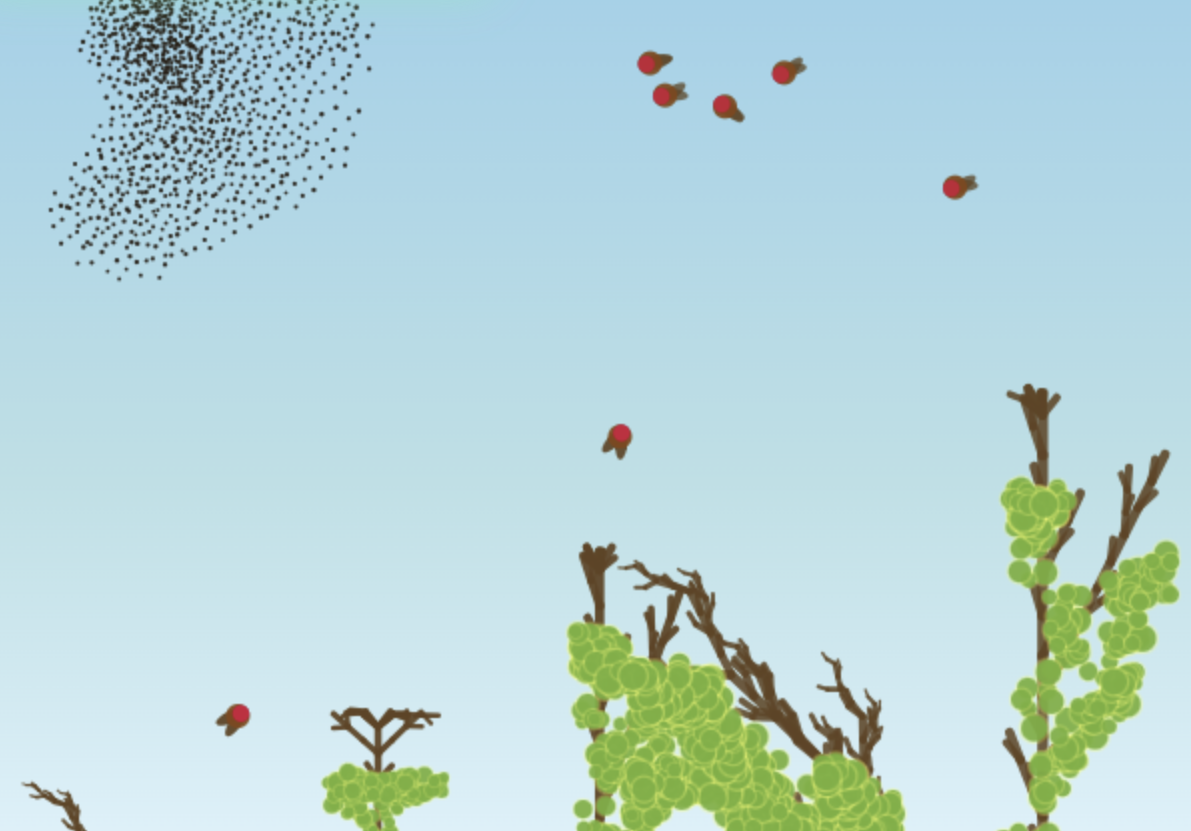
Birds, Bees, Butterflies and Bats!
These simulations demonstrate non-Markovian swarming across multiple species, each carrying coherence, rupture, and regeneration through its agents. The bees demo is the deepest implementation: it surfaces conjugacy products C·Ω and beauty-function readouts B(C) = exp(C/Ω)·(C*−C) directly in the telemetry, with Ω anchored to 1/π. Robins exhibit territorial behaviours, building nests on L-System trees while avoiding eagle predators through coordinated flocking. Bats use sonar to hunt insects above a moonlit sea.
Each species operates through distinct CRR parameters, creating diverse behavioural patterns from the same mathematical framework. Swarm intelligence emerges from local interactions between autonomous agents, demonstrating how a small set of CRR rules generates complex ecosystem dynamics.
Birds Bees Butterflies Bats And...AgAnts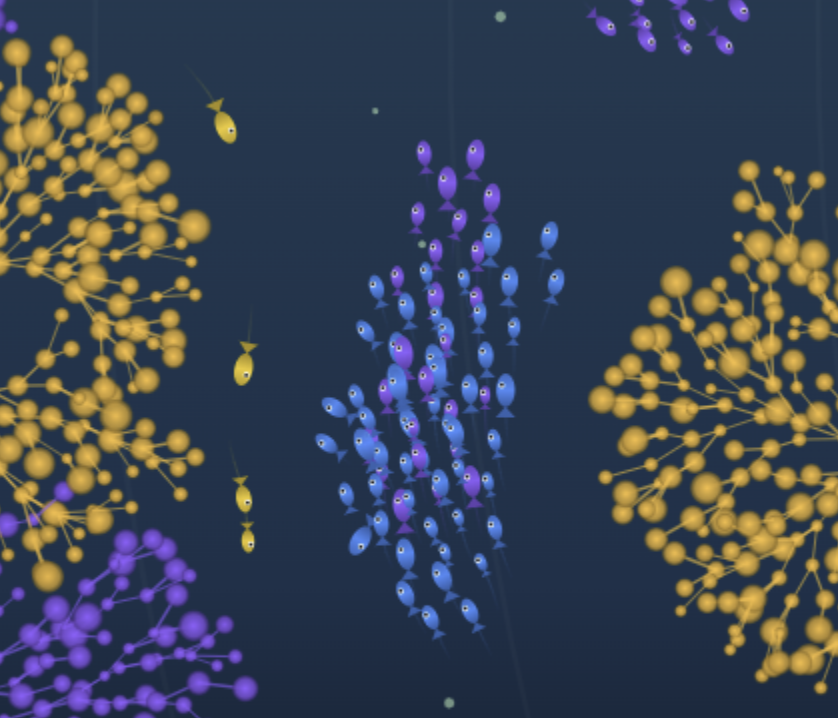
Marine Environments
Mathematical coral systems respond to environmental heat stress through coherence-based bleaching and recovery cycles, with branching probability driven by exp(C/Ω). Fish populations interact with coral through feeding behaviours, while mathematical currents shape the fish school behaviours and movements in real time.
These aquatic ecosystems demonstrate how CRR principles scale from microscopic plankton to complex reef systems, with each organism contributing to collective coherence through biochemical signalling and spatial organisation.
Marine Tank Marine Tank (with current adjustment)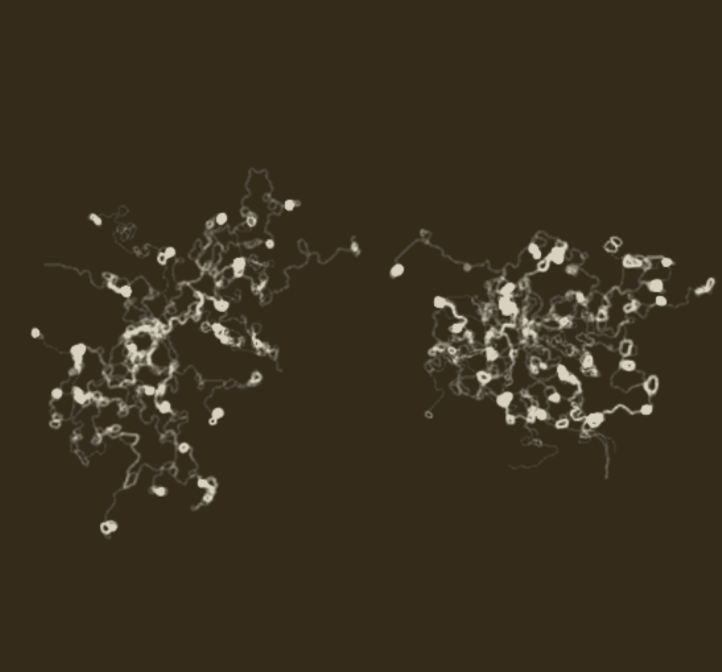
Moss & Mycelium
The mycelium simulation is the canonical CRR demonstration on this page: each hyphal tip accumulates coherence C from local environmental signal, ruptures (branches) when C reaches C* = 1/Ω, and regenerates with growth rate amplified by exp(C/Ω). A 700×700 spatial coherence field tracks the integrated history of mycelial activity across the substrate, and inter-rupture interval CV is reported live.
The tree-ring viewer plays back a CRR analysis of the New Forest UK1505 dendrochronological record: per-year L, C, R, and rupture flags computed offline from the actual ring-width data. Mycelial intelligence emerges through network topology optimisation and resource-sharing behaviours that transcend individual organism boundaries.
Moss (Advanced) Mycelium New Forest Tree Ring Growth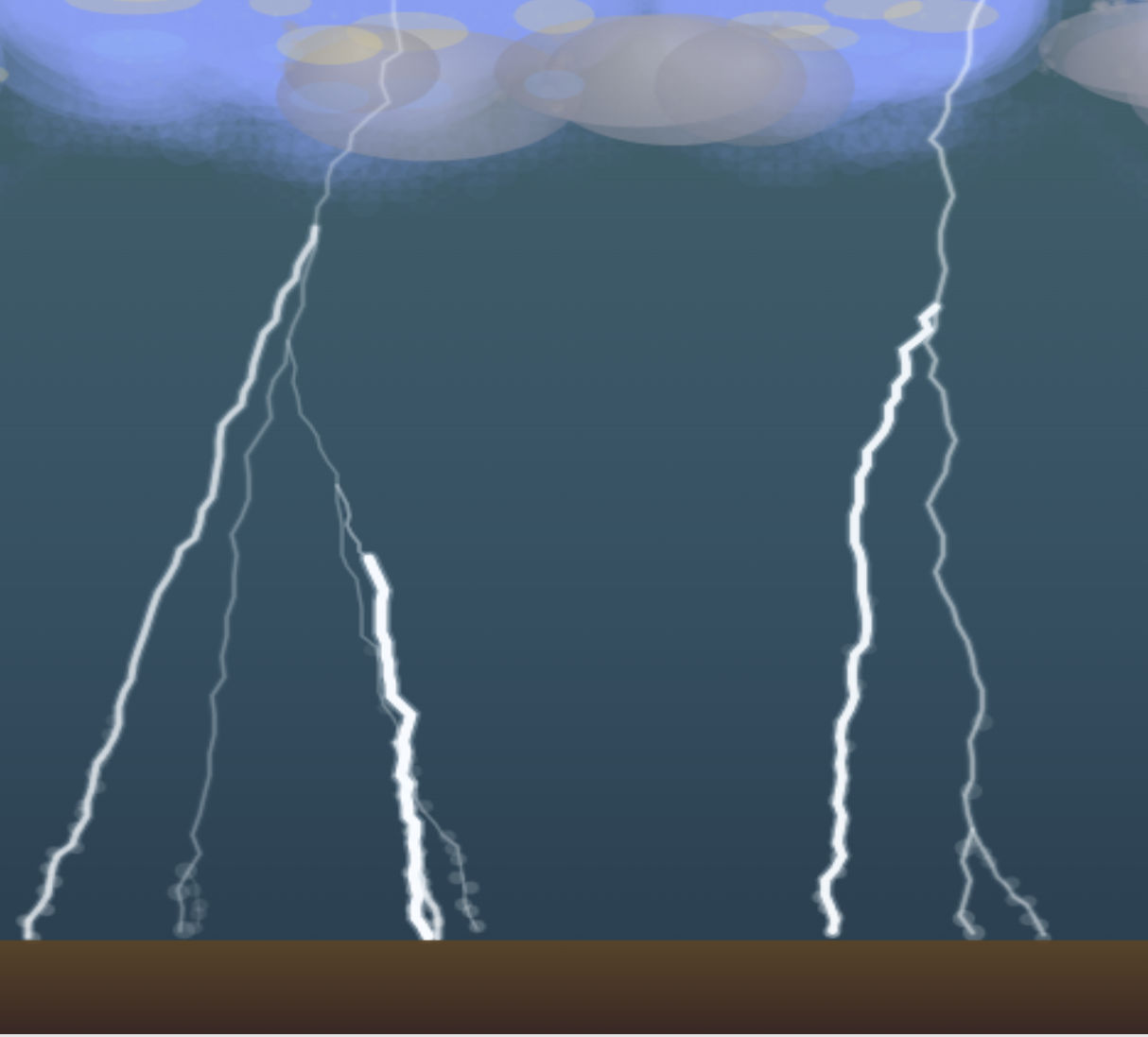
Weather Systems
Atmospheric CRR dynamics drive cloud formation, charge accumulation, and lightning discharge patterns. The system tracks coherence-rupture-regeneration phases as electrical potential builds in cloud systems until the derived threshold C_crit = Ω·log(Λ/λ₀) triggers lightning strikes through optimal CRR field pathways.
The simulation features both bolt lightning (cloud-to-ground strikes) and sheet lightning (cloud-to-cloud discharges), with interactive controls and real-time storm parameters. Users can observe how CRR coherence fields influence atmospheric electrical behaviour and precipitation patterns. The hurricane example shows three toy models of memory-based hurricanes over Jamaica.
Experience Storm Formation Experience CRR Hurricane